Why Satya Nadella Is Reshaping Microsoft to Thrive on AI.
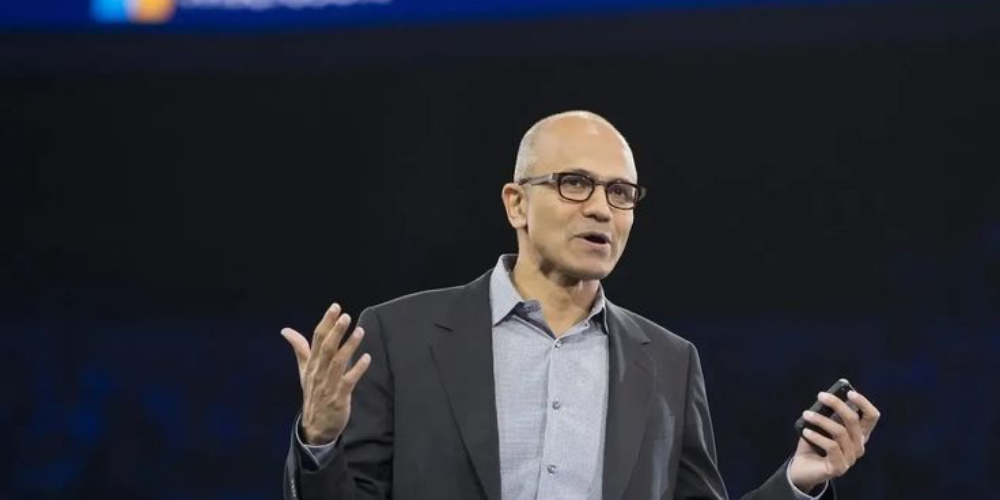
In the ever-changing world of technology, where artificial intelligence (AI) has ceased to be a high-level concept and turned into a business necessity, the Microsoft leadership has taken critical and decisive actions to make sure that the company leads the AI revolution. The core of this change lies in Satya Nadella, the Microsoft CEO, a leader who is known to be strategic and capable of initiating change in the organization with regards to new paradigm shifts.
In recent times, Nadella has declared an extensive reorganization that may speed up AI activities in Microsoft’s businesses, culture, and operations. This blog post discusses what this restructuring involves, why, and how this restructuring will help Microsoft not only compete but also be in the lead in this era of AI.
The Situation: Artificial Intelligence as a Strategic Niche.
Artificial intelligence is not a fringe field of study anymore, but it is the new frontier of the computing world. The technology is transforming entire industries, starting with generative models such as ChatGPT or AI agents that can automate intricate tasks. In the technology world, firms are outdoing each other in terms of integrating AI in all their layers of offerings, and Microsoft is not left behind.
Since being appointed as CEO, Microsoft has always focused on how AI can be leveraged to redefine productivity tools, cloud computing, platform development systems, and enterprise applications. But the size and speed of innovation have led to the fact that traditional organizational structures, designed to focus on individual product lines, may serve to slow down decision-making and diffuse attention.
Satya Nadella decided that to make AI work, Microsoft must have a more agile and purpose-driven organizational structure, which will bring together strategy, execution, and innovation around AI.
Breaking Down the Restructuring
- Satya Nadella: Reassigning Key Leadership Roles
Among the most obvious parts of the restructuring is the promotion of Judson Althoff, one of Microsoft employees, to the position of CEO of the Commercial Business. Althoff, the former head of sales and customer engagement, now has an extended role of spearheading sales, marketing, and operations divisions of Microsoft. The purpose of this change is to streamline commercial operations under one leader, and as a result, Satya Nadella is freed to pay more intensive attention to AI and innovation as the foundation of Microsoft in the future. (The Official Microsoft Blog)
Distributing further commercial duties of the company, Satya Nadella is setting up to allocate more time to product vision, technology strategy, and AI infrastructure, which are all important since they enable the company to put AI initiatives into high strategic gears more quickly. (IT Pro)
- Transforming the Focus of Nadella to be innovative instead of operational.
Such reorganization is also characterized by a significant redirection of the focus of Nadella. Internal communications suggest that the CEO is exiting some of its operational responsibilities and focusing more on the fundamental technological innovation and artificial intelligence strategy. (WebProNews)
This shift is indicative of the realization that guiding Microsoft through the current shift in the AI platform needs more than managerial accountability; it needs to be thoroughly embedded in the technical issues and opportunities AI has to offer. Nadella is making the leadership priorities of Microsoft focus on AI and data center infrastructure to structure the priorities of Microsoft accordingly to the fields that may shape the decade of next-generation computing.
- New Internal Process to Enhance AI-Centered Cooperation.
Microsoft is doing more than restructuring positions; it is also restructuring the internal way the company works. Recent articles report that Nadella recently started holding weekly AI accelerator meetings that purposely circumvent the conventional managerial hierarchies. Rather than having executives provide updates, junior technical members and engineers should be invited to chair the meetings with some fresh insights and first-hand information on what is going on at the forefront of the development of AI. (The Times of India)
This action is a counter to the conventional top-down communication model that is characteristic of big companies. It is a concerted effort to make AI go faster by making sure that ideas built by the technology developers are passed to the technology strategy-makers without unwarranted filters and delays.
Also read: The Dark Side of AI and Automation: Will It Take Jobs or Create New Career Opportunities?
Strategic Rationalization of the Restructuring.
- Artificial Intelligence Is a Tectonic Platform Shift.
Despite the concept of artificial intelligence being widely acclaimed by tech leaders such as Satya Nadella, who publicly referred to AI as a tectonic platform shift, i.e., its potential will be as significant as the one the transition to the cloud has had. The commercial success of Microsoft in the past ten years was anchored on its cloud business in Azure, which led to a lot of revenue and offered new enterprise capabilities to the organization. However, AI is also a new generation of technology, and it transcends the infrastructure and includes the re-architecturalization of the way software functions, the design of productivity tools, and the value-generation of enterprises.
In order to remain competitive in this new age, Microsoft should not only create AI technologies but also implement them in all aspects of its company. This is the twofold need that makes the restructuring process developed by Nadella focus on strategic emphasis rather than on conventional organizational control.
- Improving The Decision-Making Process and Minimizing Bureaucracy.
Agility is an issue in large technology organizations because of levels of management and official procedures, which, although useful in ensuring stability, make it difficult to achieve quick innovation. Satya Nadella is aware of this being a challenge to Microsoft and even a weakness. The company can speed up the work on AI in product teams by eliminating bureaucracy and empowering the teams that are nearest to the technology. This cultural change can be compared to the dynamic of a startup, where quick trial and quick iteration are the norms. (The Times of India)
- Greater Market and Customer Needs-Fit.
The adoption of AI is steep, and the expectations of customers are changing at the same pace. Businesses are seeking solutions that are productive, cost-efficient, and discover unlimited insights through data that are driven by AI. The reorganized leadership at Microsoft is more focused on involving actual customer feedback and use cases in the development process. With the leadership of Althoff, Microsoft can make AI capabilities, which are in line with the need of the real market, gain quicker adoption as the marketing, sales, and engineering teams coordinate their efforts effectively.
Specific Measures to expedite AI.
- Zoetropic Workforce and Intelligent Recruitment.
In addition to the reform of leadership, Microsoft is transforming its workforce policy so that it can promote the AI innovation more effectively. Following several years of layoffs as a result of AI restructuring, where not all jobs were lost because of performance but as a result of the resetting of priorities, the company is now entering a phase of strategic expansion and re-hiring to keep AI in mind. According to Nadella, the future of hiring will be determined by the role AI can play in enhancing productivity, rather than simply increase the number of employees (www.ndtv.com).
The strategy is part of a larger process of integrating AI into the core of the company’s work processes and culture so that staff members can be prepared to work with the latest AI technologies and processes (as opposed to the current systems).
- Outside Investment and AI System Proliferation.
As much as the internal restructuring is core, Microsoft is incurring significant external commitments that are linked to its AI priorities. As an illustration, the firm intends to spend billions of dollars in AI infrastructure and cloud services in such markets as India, where it seeks to assist in training millions of people in AI skills and increase the data center capacity. (www.ndtv.com)
These investments have both roles: not only do they increase the presence of Microsoft in the world, but also allow to create an extensive AI developers ecosystem,
users, and partners. A stronger ecosystem means greater demand for Microsoft’s AI services, tools, and platforms ultimately helping the company accelerate AI efforts at a global scale.
Challenges and Criticisms
Being as ambitious as they are, they encounter difficulties and are met with mixed responses.
- The Barriers of AI Products Adoption.
The Copilot and other AI products developed by Microsoft have not been adopted. According to internal reports, the rates of usage are below the expected ones, despite the extensive integration of the products. The reason is that despite all the additions of AI to the productivity tools, this particular test demonstrates that the customers should see a tangible value being apparent in their everyday lives. It needs to be faster, not just through improved technology, but also by making the users cozy and enthusiastic to use it.
- Cultural Resistance and Executive Alignment.
Friction can develop in big changes in a large company. It is reported that Microsoft leaders are under pressure to embrace the AI change to the maximum. Some executives are commanded to either commit or quit. (The Times of India) It is an all-or-nothing strategy that may divide, though it creates a strong impression: AI is something that Microsoft cannot afford, not something it can afford to do without. Being decisive is a strength that can benefit the company, but it can also cause tension when not done carefully.
Future Outlook: The Implications of this to Microsoft and the Industry.
- A Reimagined Microsoft
Satya Nadella is transforming Microsoft into an AI-focused model, integrating AI across its technology, processes, and products. This change reflects previous changes in the industry, like the shift by IBM to the service-focused hardware industry and the shift of Apple to mobile computing. An effective AI transformation would mark a new chapter for Microsoft and establish a new norm in the sphere.
- Competitive Positioning in the AI World.
The reorganization will help Microsoft be more competitive against other large technology companies that are highly investing in AI, like Google, Amazon, Meta, and specialized AI firms. It has a distinctive advantage owing to its robust cloud platform, business software, and development tools, as long as it successfully implements AI in all of its platforms.
- Influence on Developers and Customers.
To customers and developers, a restructuring in Microsoft may imply faster movement of AI-powered features, further incorporation of AI tools in daily operations, and more support to AI innovation. The emphasis on bottom-up collaboration and technical leadership implies that Microsoft will be able to emerge and implement bleeding-edge ideas more quickly, which is a vital advantage in the rapidly changing AI landscape.
Learn from Satya Nadella: A Radical Plan to Step Up AI efforts.
The reorganization of Microsoft by Satya Nadella is a radical strategic change based on AI. Nadella strives to position Microsoft in the center of the AI revolution by shifting leadership duties, building new internal collaboration patterns, investing outside the company in AI systems and expertise, and altering the approach to talent management.
This change is not only regarding technology but culture, priorities, and organizational design. To succeed in a world where AI is considered a factor of competitive advantage, Microsoft will need to think, act, and lead differently. Satya Nadella, through this reorganization, is steering the company towards a path to speed up AI efforts in all aspects of its business a practice that may not only define the future of Microsoft, but the technology over the decades.