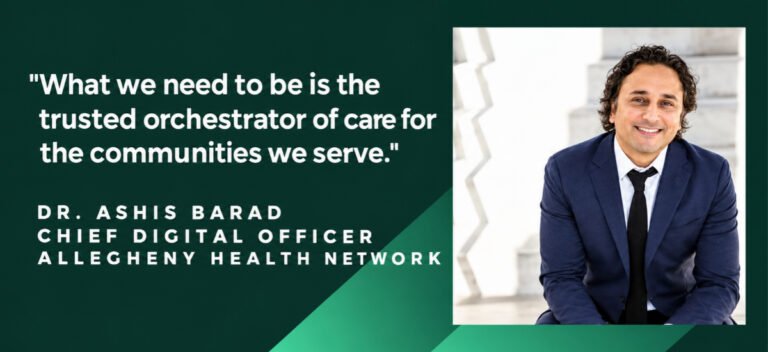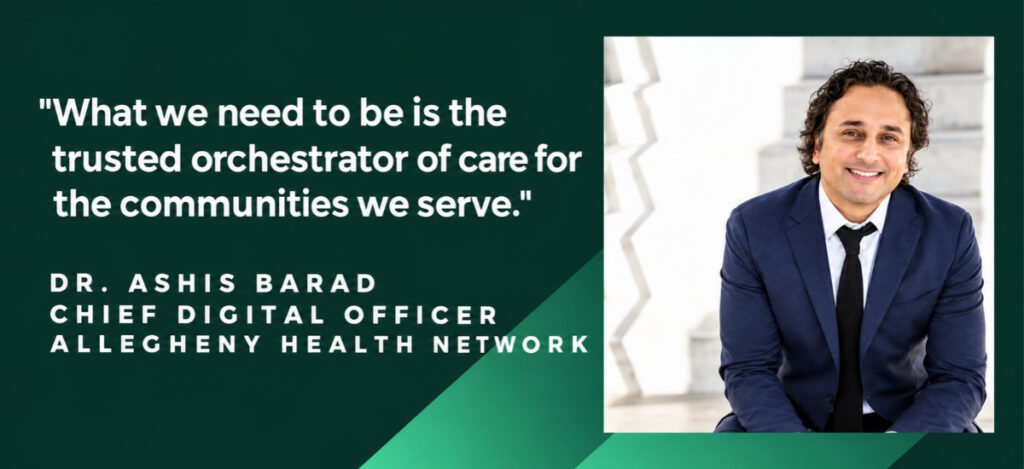
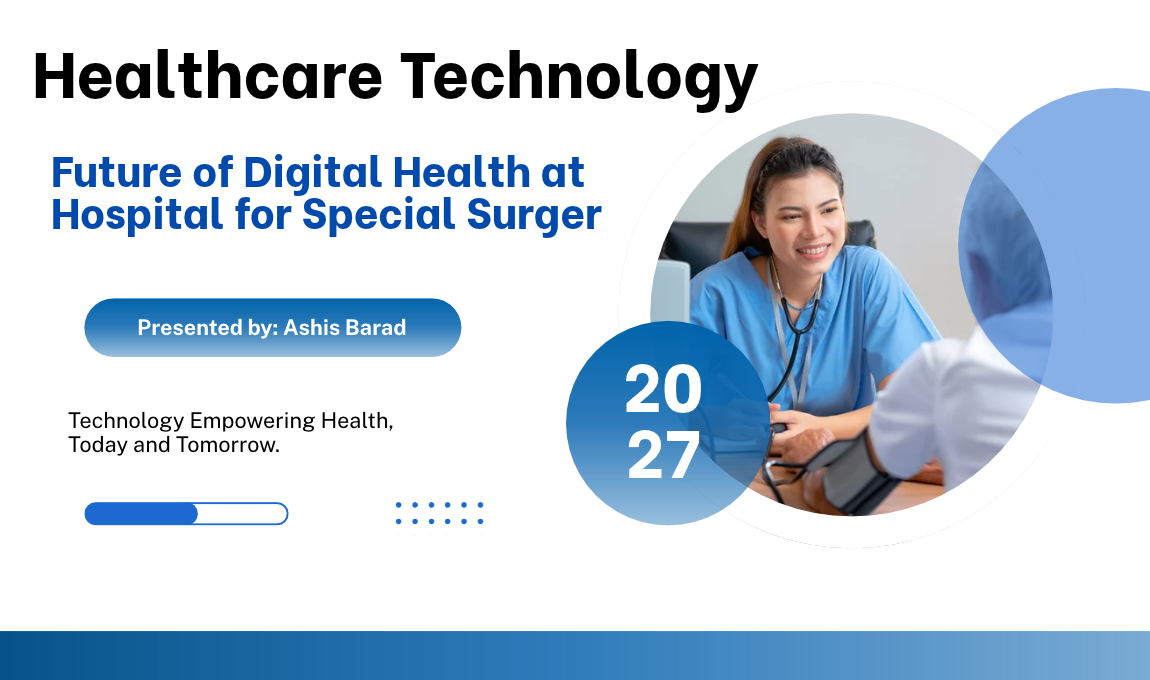
Ashis Barad and the Future of Digital Health at Hospital for Special Surger
Introduction:
Why Digital Leadership Matters in Healthcare
Health care is undergoing a dramatic transformation as medical facilities adopt artificial intelligence, digital technology, data analytics, and connected systems to improve care delivery and patient outcomes. The sector is witnessing an unprecedented opportunity to scale services to better serve patients’ needs, enhance clinicians’ performance, and increase overall efficiency. However, the path to success is not that simple: beyond technologic al innovation and solutions, the process requires heavy emphasis on clinicians’ needs, as well as integrated approaches to ensure digital technology serves its purpose.
Ashis Barad, M.D., is a physician executive who bridges the divide between clinical medicine and emerging opportunities in digital technology. The doctor recently joined Hospital for Special Surgery (HSS) as the organization’s first-ever Chief Digital & Technology Officer, having previously served as the Chief Digital and Information Officer at Allegheny Health Network. With his vast industry experience, Dr. Barad has been focusing on his dual background in clinical medicine and digital technology, virtual health and information technology, artificial intelligence, and data analytics.
His area of professional expertise is particularly relevant, given that many hospitals and medical facilities offering specialized care are seeking to transform the patient experience, supporting them throughout their unique care journeys – from pre-surgery to post-rehabilitation and mobility management.
To Dr. Barad, the concept of digital transformation goes beyond the mere adoption of new tech: it is about building connected ecosystems that allow clinicians to operate more efficiently and effectively while giving patients a more integrated experience.
Ashis Barad’s Journey from Clinical Medicine to Digital Leadership
One of the unique aspects of Ashis Barad’s professional life is that he was initially a pediatric gastroenterologist. He moved to a corporate world later. Being a practitioner makes him understand the problems doctors face at hospitals: documentation, communication, complex decision-making processes, and a lack of time with patients.
These insights are critical to the work of technology executives, as the technologies they develop and implement need to address these issues. It is one thing to create an efficient system, but it is another to make physicians adopt it. Barad has more than 18 years of experience, a part of which he spent working in the healthcare technology space. Before HSS, he was responsible for digital health initiatives, AI, and analytics at Allegheny Health Network. His current job at HSS is connected to enterprise technology and digital operations.
Such an educational and professional background is significant for the position of Chief Information Officer at a hospital. Experience in healthcare, technology, and leadership is required to address the sector’s issues. The challenges.digital health professionals face today are tremendous, and they need communities of fellow professionals to rely on. Moreover, an effective solution can be created only with the input from clinicians, administrators, information technology professionals, and external partners.
A technology executive needs to have a physician’s perspective, be familiar with the intricacies of hospital work, and know what changes are needed. Otherwise, even the most brilliant solutions will see only limited adoption in the industry. There is no point in developing a system that would require clinicians to change their established workflows unless there is a verified need for such a change.
Understanding Digital Health at Hospital for Special Surgery
Hospital for Special Surgery focuses on orthopedics, rheumatology, and related matters. That makes for a great opportunity to use technology to serve the patients’ journeys through such procedures as joint replacement, sports medicine, rehabilitation, and other relevant treatments.
Such patients may benefit from the digital transformation of their journeys through the hospital. They often need assistance with scheduling, preparation, treatment courses, and recovery, while the staff needs guidance on providing the most adequate care. Leaders of such facilities can use digital tools to complement their services without undermining medical expertise.
Key areas of digital transformation in specialized healthcare
| Technology area | Potential application | Patient or clinical benefit |
| Digital patient access | Online scheduling and intelligent appointment support | Easier access to the right specialist |
| Artificial intelligence | Documentation assistance and clinical workflow support | Less administrative burden |
| Data analytics | Identifying trends in clinical and operational information | Better-informed decisions |
| Virtual health | Remote communication and follow-up | More convenient care interactions |
| Connected systems | Sharing relevant information across care settings | Better continuity of care |
These applications illustrate how technology can support the work of a specialized medical institution. Their value depends on implementation quality, clinical suitability, data security, and ongoing evaluation.
HSS has also invested in innovation initiatives focused on patient-centered solutions, medical technologies, and digital care. Its Innovation Institute brings together clinical expertise, research, and technology development to advance musculoskeletal healthcare.
Artificial Intelligence and the Future of Clinical Workflows
Artificial intelligence is becoming an increasingly significant aspect of healthcare technology strategy. The technology can go beyond merely providing answers and texts; it can be utilized to support administrative functions, facilitate documentation and communication, and eliminate clerical tasks that compete for clinicians’ time with direct patient care.
HSS has joined forces with Abridge, an AI startup, to implement AI-assisted clinical documentation for orthopedic surgeons in 2025. Abridge’s platform was chosen to address critical areas, including patient communication and documentation, with an expected impact on 200 000 patients per year.
Clinical documentation, including capturing symptoms, examination, treatment details, and instructions, is an indispensable part of each clinical encounter. However, it often demands much time from professionals, who have to split their attention between the patients and the computer. With the help of AI technology, it will be possible to capture two-way dialogues and recreate them virtually to produce clinically relevant notes.
However, clinicians should not rely on AI’s ability to dictate or type notes. They should invest time in reviewing the material to ensure that the documentation is accurate and devoid of relevant omissions. Furthermore, clinicians and administrators should develop standardized policies, procedures, and protocols for the use of AI within the hospital or clinic. Such measures will ensure that patients provide informed consent and that the privacy, confidentiality, access, and security are not compromised.
The central point is that AI should be seen as a tool that supports clinicians. Its efficacy should be judged not by the volume of text it can generate but by the quality of care it allows clinicians to deliver.
Moving from Individual AI Tools to Connected Healthcare
Many hospitals are initially tempted to invest into AI to solve only one particular case, like preparing a documentation or responding to some frequently-asked questions. However, it is evident that a complex task, such as healthcare provision, involves interrelated sets of processes. The real challenge is to standardize and systematize the most relevant regulations to make a healthcare ecosystem more operationally efficient.
The concept of an agentic AI has been highly attractive for many organizations because such technology can prioritize specific goals by performing sets of actions within isolated or system-wide processes. Depending on the degree of an agent’s capabilities and limitations, it can autonomously organize and distribute information, execute certain actions, and escalate critical events that require an immediate human intervention.
Within the broader topic of healthcare innovation, Barad has explicitly mentioned “the opportunity for AI to help orchestrate” the overall health care delivery. In other words, it is not enough to rely on isolated cases when technology streamlines a specific process within one department. Instead, HSS suggested looking at the entire continuum of musculoskeletal care, including wellness, prevention, and treatment across both surgical and nonsurgical options, as well as performance.
For example, a connected patient journey could involve several stages:
- A patient describes a problem through a digital access channel.
- A system helps identify the appropriate specialist or care pathway.
- The appointment is scheduled using approved scheduling information.
- Relevant preparation instructions are shared with the patient.
- Clinicians receive the information needed for the consultation.
- Follow-up steps are coordinated after the visit.
This is an illustrative workflow, not a claim that every step is currently automated at HSS.
The main opportunity is to reduce friction between separate systems. The challenge is ensuring that automated actions remain transparent, secure, clinically appropriate, and easy for staff to supervise.
Traditional digital tools versus coordinated AI workflows
| Feature | Traditional digital tools | Coordinated AI workflows |
| Primary purpose | Complete an individual task | Coordinate several related tasks |
| Information handling | Often limited to one application | May connect approved information sources |
| Human involvement | Users initiate and manage most steps | Humans supervise automated actions |
| Main opportunity | Improve a specific process | Reduce friction across a wider journey |
| Key concern | Integration and usability | Integration, oversight, accuracy, and safety |
The most effective approach is not maximum automation. It is appropriate automation, with clear limits and human oversight wherever clinical judgment or sensitive decisions are involved.
Improving Patient Access Through Digital Innovation
Access is often the first challenge patients face. Finding the right specialist, understanding available services, scheduling an appointment, and knowing what to expect can become complicated, especially when a hospital treats patients across multiple locations and specialties.
In January 2026, HSS announced a collaboration with Ema to deploy AI agents for patient access, beginning with scheduling and triage. The organization described capabilities intended to help patients find appropriate specialists, schedule appointments, and receive support through online, text, and phone channels.
news.hss.edu
This development can solve many real-world cases of access to care issues. It allows patients to avoid the stress of menus and tangle with a helpful assistant who will ask them the right questions before giving a direction.
For a hospital that provides better access to better care, it can be a great tool that will help patients who are unsure which department to go to or which doctors to see. The intelligent assistant will take over the process and ask the clarifying questions needed for the proper routing of the request according to the hospital’s standard operating procedures.
However, providing patients with access to care is not just about routing the calls. An intelligent assistant should provide the necessary information and services easily accessible and understandable ways while still providing access to humans if the issue needs to be taken care of immediately.
An intelligent assistant should have limitations since there are some symptoms that require higher levels of emergency care, and patients should not be routed to an automated IVR when their symptoms require immediate care. I think it is essential to maintain the human touch in patients’ communication to ensure that they are well-cared for without losing the efficiency and simplicity of the automated processes.
Data Analytics and More Informed Healthcare Decisions
Data is another critical component of the digital transformation. Hospital records, diagnostic reports, appointment systems, feedback services, billing systems, and other processes produce information that can be evaluated to improve the organization’s efficiency and effectiveness if correctly categorized and processed.
The experience of Ashis Barad, who has been involved in data analytics, combined with his management responsibility for HSS’s broader technology and digital transformation, reflects the importance of this issue.
For instance, operational analytics can be used by hospital administrators to study the causes of appointment delays, staff shortages, patient numbers, or other issues associated with the organization’s operation or management.
Similarly, clinical analytics can be used to conduct research or analyze patterns associated with a particular treatment, which is possible due to the correct collection and examination of data. However, it should be stressed that data alone is not enough for decision-making.
It is paramount to ensure that this information is relevant, reliable, up-to-date, well-structured, and properly presented to stakeholders, which becomes possible due to analysts’ efforts. Moreover, if data is not collected correctly or is used out of context, it might mislead hospital administrators and policymakers.
Finally, another essential aspect of a hospital’s digital transformation is data governance and protection. It is essential to ensure that only the necessary personnel have access to patients’ confidential information and that data is not shared externally without authorization.
How healthcare data can support operational improvement
| Data application | Question it can help answer | Potential outcome |
| Appointment analytics | Where are scheduling delays occurring? | More efficient appointment processes |
| Patient feedback | Which parts of the care journey create confusion? | Better communication and service design |
| Clinical outcome analysis | How do outcomes vary across patient groups or treatments? | Opportunities for evidence-based improvement |
| Workforce analytics | Where are repetitive administrative tasks concentrated? | Better allocation of staff time |
| System performance monitoring | Which applications or integrations cause disruptions? | More reliable technology operations |
These examples describe potential uses rather than verified results attributable to Barad personally. The central principle is to translate reliable data into practical decisions that support patients and healthcare professionals.
Building Technology Around the Needs of Clinicians
A technology platform can be technically advanced and still fail if clinicians find it difficult to use. Healthcare professionals work in environments where time, attention, and accuracy are essential. Every additional click, duplicate entry, or confusing alert can create friction.
For this reason, successful digital transformation should begin with understanding how work is performed.
Clinicians should be involved in identifying problems, testing solutions, and reviewing results. Technology teams can then design workflows that fit clinical practice rather than forcing staff to adapt to poorly designed systems.
At HSS, the emphasis on integrating digital solutions into clinical workflows has been part of the stated rationale for Barad’s leadership appointment.
Several practices can help make technology more useful:
- Understand the problem first: Identify the specific task or barrier the proposed solution is meant to address.
- Involve frontline teams: Gather feedback from physicians, nurses, administrative staff, and other affected users.
- Test before scaling: Evaluate the tool in an appropriate setting and resolve usability issues before wider deployment.
- Measure real outcomes: Track whether the solution saves time, improves reliability, or makes care easier to navigate.
- Provide ongoing training: Ensure that staff understand the tool, its limitations, and when human intervention is necessary.
These steps are especially important for AI systems, whose performance can vary depending on the task, the quality of information provided, and the context in which they are used.
Responsible AI, Privacy, and Patient Trust
Trust is fundamental to healthcare. Patients share personal information because they expect it to be handled responsibly and used to support their care. Introducing AI into clinical and administrative processes makes privacy, security, and transparency even more important.
Healthcare organizations must consider how systems collect information, where it is processed, who can access it, and how long it is retained. They must also evaluate whether an AI tool is suitable for its intended purpose and whether its output can be checked by an accountable professional.
For digital leaders, responsible implementation involves both technical and organizational safeguards.
Essential safeguards for healthcare technology
| Safeguard | Why it matters |
| Data privacy | Protects confidential patient information |
| Access controls | Limits sensitive information to authorized users |
| Human oversight | Keeps clinical decisions under appropriate professional supervision |
| Validation and monitoring | Helps identify errors and performance problems |
| Clear accountability | Establishes who is responsible for decisions and system use |
| Staff education | Helps users understand limitations and safe practices |
These principles are important whether a hospital is introducing AI documentation, automated patient access, predictive analytics, or connected digital platforms.
A responsible strategy also recognizes that patients have different levels of digital confidence. Online tools should complement, rather than unnecessarily eliminate, traditional communication channels. Accessibility, language needs, and the ability to reach a person remain important considerations.
The purpose of healthcare AI should be to strengthen the relationship between patients and clinicians—not to make that relationship harder to maintain.
The Future of Digital Health at HSS
The next stage of healthcare transformation will be characterized by more connected digital ecosystems, optimized use of clinical information, and AI systems that work across organizational units.
At a specialized organization such as HSS, the opportunity is even bigger than individual hospital visits: technology can tie together prevention, diagnosis, treatment, and rehabilitation into a coordinated whole.
HSS has also announced investment in a Digital Twin Platform for orthopedic care; in November 2025, the organization received a $10 million gift to develop the platform, which will use three-dimensional imaging and virtual anatomical models to support surgical planning and data-informed clinical decisions.
This represents an important trend in healthcare innovation: using digital approaches to help clinicians navigate complex clinical situations, evaluate options, and make the best choices.
But at the same time, advanced technology must be properly evaluated. A digital twin, AI assistant, or predictive model should prove to have appropriate clinical value, fit with existing workflows, and sufficient validation before its benefits can be assumed.
For digital leaders such as Ashis Barad, the challenge is to create an environment in which experimentation and innovation can be balanced with clinical responsibility, cybersecurity, and tangible results.
The organizations most likely to benefit from digital transformation will be the ones that align technology investments with clearly defined patient and operational needs.
Measuring the Impact of Healthcare Technology Leadership
Digital transformation is a continuing process, not a one-time implementation. Once a new platform is introduced, healthcare leaders need to understand whether it is achieving its intended purpose.
Measurement should include more than financial returns or the number of systems deployed. Hospitals should examine how technology affects patients, clinicians, operational processes, and the reliability of care delivery.
Useful measures may include appointment access, documentation time, system availability, staff satisfaction, patient feedback, and the accuracy of AI-supported outputs. Each metric should have a clear definition and an appropriate baseline for comparison.
The following framework illustrates how an organization could evaluate a digital health initiative.
Suggested digital transformation measurement framework
| Area | Example indicator | What it helps evaluate |
| Patient experience | Patient feedback and access difficulties | Whether services are easier to navigate |
| Clinical workflow | Time spent on administrative documentation | Whether repetitive work is reduced |
| Operational performance | Appointment delays and process completion times | Whether workflows are becoming more efficient |
| Technology reliability | System availability and integration errors | Whether digital services are dependable |
| Responsible AI | Error rates and required human corrections | Whether outputs are sufficiently reliable |
| Adoption | Staff usage and training completion | Whether the solution fits actual working practices |
These are suggested measures, not reported performance results for HSS or Ashis Barad. Their value lies in creating a practical way to assess whether a technology investment is delivering meaningful improvements.
Healthcare organizations should also examine unintended consequences. A tool that reduces documentation time but increases correction work may not provide the expected benefit. Similarly, a scheduling system that processes requests quickly but directs patients to inappropriate services needs further evaluation.
A balanced measurement strategy helps leaders distinguish between technology adoption and genuine improvement.
Read More: How Jack Ma Turned Failure into Success: The Untold Story Behind Alibaba
Conclusion: Ashis Barad and the Importance of Patient-Centered Digital Leadership
Ashis Barad is the kind of health care leader who combines a passion for clinical medicine with vision in digital technology, and innovative thinking. His hiring at the forefront of health care specialty is an indication of the trend that healthcare organizations are embracing digital solutions.
From AI-powered medical records transcription and patient access to data analytics and new digital media, healthcare technology has come a long way in helping the whole process run smoothly and serve the best interests of patients. However, it is important to ensure that technology is effective, protects the privacy of health information, and is user-friendly.
Barad’s experience in clinical medicine is a great advantage in the current state of healthcare digitalization. The key to successful experience in this domain is understanding the needs of clinicians, patients, and the role that innovation plays in serving their best interests.
The next phase of healthcare will not be defined by the number of AI applications downloaded into a hospital’s health record system, but rather how they support clinicians and patients in achieving better outcomes.
For HSS and the wider healthcare industry, the most promising approach is one in which innovation remains grounded in patient needs. Technology should make it easier for clinicians to deliver care and for patients to receive it—while keeping human expertise, safety, and trust at the center of the healthcare experience.
Read More: The Business Legacy