Narayanan Gopala Mayo Clinic: 7 Powerful Ways to Advance Digital Healthcare
Introduction: The Growing Importance of Digital Healthcare Leadership
Healthcare is witnessing an era with a significant number of changes. More and more patients are demanding convenience when accessing medical services, clinicians are relying on digital technologies to help them provide better care, and companies must find innovative ways to optimize their operations and remain efficient and profitable. Digital technologies have become essential to address such demands and solve these problems.
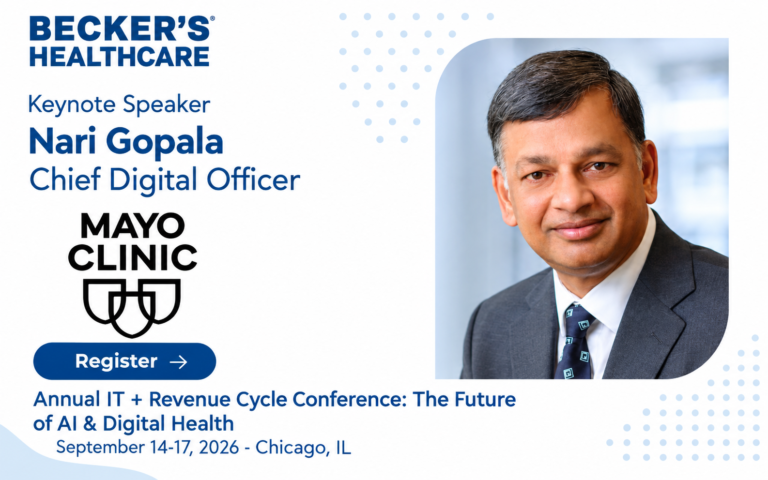
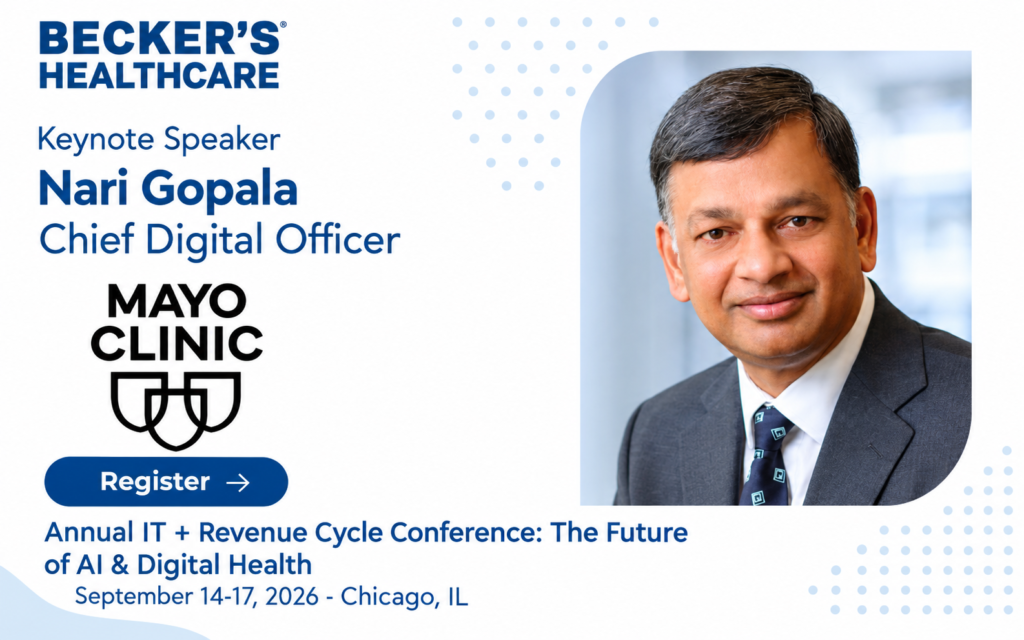
There are many ways of managing a leading medical institution, but one individual, the chief digital officer of the organization, plays a critical role in overseeing digital transformations and services. Narayanan Gopala, also known as Nari Gopala, is the chief digital officer of Mayo Clinic, a position he held as of December 2024. He previously served as the chief digital officer of Kaiser Permanente and occupied various technology executive-level functions at Amazon Web Services and Sony Online Entertainment, a video game developer and publisher. Such experience gives him a profound understanding of issues related to digital technologies and the healthcare industry to lead its transformation effectively. Source: Becker’s Hospital Review.
The digital transformation of a healthcare company such as Mayo Clinic encompasses more than adopting digital technologies and adjusting its operations to be more efficient and profitable. It also means integrating new solutions into the practice of clinicians, studying emerging opportunities for clinicians and patients, and taking into account the everyday needs and demands of the company’s clients. The activities performed by Nari Gopala can be used as an example of how chief digital officers can make healthcare institutions more convenient for patients and more efficient in its operations.
Understanding Narayanan Gopala’s Role at Mayo Clinic
A chief digital officer helps an organization establish a clear direction for its digital services and technology-enabled experiences. In healthcare, that responsibility becomes especially important because technology must support patient care while meeting demanding standards for privacy, security, reliability, and usability.
At Mayo Clinic, Gopala leads enterprise-wide digital strategy, with a focus on improving the experiences of patients and staff through transformative technologies. His work also involves collaboration with the medical leadership associated with Mayo Clinic’s Center for Digital Health. Source: Becker’s Hospital Review.
This role brings together several important priorities:
- Developing a consistent digital direction across the organization.
- Improving how patients interact with digital healthcare services.
- Supporting clinicians and staff through useful technology.
- Helping digital initiatives move beyond isolated experiments.
- Encouraging collaboration between technology teams and clinical experts.
The challenge is not simply to adopt more technology. It is to ensure that each investment addresses a genuine need and contributes to the organization’s wider healthcare mission.
From Technology Leadership to Healthcare Transformation
Gopala’s professional journey includes experience in large-scale technology platforms and digital leadership. Before joining Mayo Clinic, he served as chief digital officer at Kaiser Permanente, where his responsibilities included transforming digital experiences for members and the clinical workforce.
His earlier roles at Amazon Web Services and Sony Online Entertainment added experience in platform engineering, technology operations, and digital product development. Source: Kaiser Permanente.
These experiences are relevant because healthcare organizations face many of the same technical challenges as other large enterprises, including system reliability, platform scalability, data management, and user experience. However, healthcare adds another layer of complexity: technology decisions can affect clinical workflows and the patient journey.
How technology experience can support healthcare
| Technology capability | Healthcare application | Potential benefit |
| Platform engineering | Reliable digital health services | Greater system stability |
| Product development | Patient portals and digital tools | More convenient experiences |
| Data integration | Connecting information across systems | Better information availability |
| Cloud technologies | Scalable computing infrastructure | Flexible technology capacity |
| User experience design | Simplifying digital interactions | Easier access and navigation |
These are potential applications of digital leadership, not a claim that every capability listed has been implemented as a specific Gopala-led project at Mayo Clinic.
The broader lesson is that successful healthcare technology leadership combines technical knowledge with an understanding of how people actually use digital services.
Making Patient Experience a Priority
Patients, as well as their caregivers, frequently interface with a healthcare organization prior to receiving treatment. An online search, a phone call, directions from hospital administration, filling out medical forms, interaction with professionals, or inquiry about test results are common examples of such activities.
When poorly orchestrated, this communication may create additional stress for patients undergoing a hard time.
Healthcare’s digital front door promises to deliver a frictionless and integrated medical experience around the clock. It helps to eliminate repetitive practices, provides a single knowledge base for families to rely on, and enables them to engage in the most appropriate mode of communication at any stage. As such, a patient experience is something that should be designed with the healthcare organization’s own business processes in mind.
What a patient-centered digital experience should include
Simple navigation: Patients should be able to locate appointments, instructions, and relevant services without unnecessary complexity.
Consistent information: Digital channels should provide clear, understandable information that supports communication with healthcare professionals.
Accessible services: Digital products should account for people with disabilities, different levels of technical confidence, and varying access to devices or reliable internet.
Connected interactions: Patients should not have to repeat the same information unnecessarily because separate systems fail to communicate.
Human support: Digital services should complement personal interaction rather than make patients feel abandoned when they need assistance.
The most effective digital healthcare experiences are not necessarily the ones with the largest number of features. They are the ones that solve real problems with the least possible friction.
Artificial Intelligence and the Next Phase of Digital Healthcare
Artificial intelligence is creating new opportunities in healthcare, from helping clinicians interpret information to supporting administrative processes and developing more personalized digital experiences.
Mayo Clinic has been actively exploring healthcare AI. In May 2025, the organization announced a collaboration with Microsoft to develop a frontier AI model designed specifically for healthcare, with ambitions that include supporting earlier diagnosis, personalized treatment decisions, and improved experiences for patients and care teams. Source: Mayo Clinic News Network.
Such initiatives illustrate the broader environment in which digital leadership operates. Developing advanced technology is only one part of the challenge. Healthcare organizations must also evaluate clinical usefulness, reliability, privacy, safety, and how AI fits into existing workflows.
Potential applications of AI in healthcare
| AI application | How it may help | Important consideration |
| Clinical decision support | Organize relevant information for clinicians | Clinical oversight is essential |
| Medical imaging analysis | Help identify patterns in images | Performance must be validated |
| Administrative automation | Reduce repetitive documentation tasks | Accuracy and accountability matter |
| Patient communication | Provide clearer access to general information | Escalation to human support is necessary |
| Research analysis | Help researchers examine complex datasets | Data quality and research validity remain critical |
AI should support qualified healthcare professionals, not replace their judgment. The appropriate level of human oversight depends on the intended use, clinical risk, and regulatory requirements.
For digital leaders, the priority is to identify where AI can deliver measurable value instead of adopting it simply because it is a prominent technology trend.

Moving Beyond Digital Experiments to Scalable Solutions
One of the biggest challenges in healthcare innovation is turning promising experiments into reliable tools that can be used across an organization.
Healthcare teams often develop new ideas to solve specific problems within their departments. This decentralized approach can encourage creativity, but it can also lead to overlapping systems, disconnected workflows, and multiple tools that perform similar functions.
In an October 2026 discussion reported by Becker’s Hospital Review, Gopala described this challenge using the term “pilothosis,” referring to the accumulation of digital pilots. The discussion highlighted the difficulty of moving from numerous individual experiments to solutions that can operate effectively at scale. Source: Becker’s Hospital Review.
This is an important issue for healthcare organizations. A successful pilot does not automatically become a successful enterprise-wide solution. Before expanding a project, leaders need to consider whether it solves a meaningful problem, integrates with existing systems, meets security requirements, and can be supported over time.
A practical framework for scaling healthcare innovation
- Identify the problem. Begin with a clearly defined patient, clinician, or operational need.
- Test the solution. Evaluate its usefulness in a controlled environment.
- Measure the results. Compare performance against agreed-upon objectives.
- Review the risks. Examine privacy, security, clinical safety, and workflow implications.
- Plan for expansion. Confirm that the technology can integrate with other systems and support more users.
- Monitor performance. Continue evaluating the solution after implementation.
From pilot project to sustainable digital service
| Stage | Main question | Measurement example |
| Discovery | Is there a genuine problem? | User feedback and workflow analysis |
| Pilot | Does the solution work? | Task completion and error rates |
| Evaluation | Does it create value? | Time saved and user satisfaction |
| Expansion | Can it scale safely? | Reliability and integration performance |
| Continuous improvement | Does it remain effective? | Adoption, outcomes, and support needs |
A disciplined approach can help healthcare organizations use resources more effectively and avoid maintaining digital products that deliver limited value.
Building Trust Through Data Security and Responsible Technology
Digital healthcare depends on trust. Patients share personal information with healthcare organizations because they expect it to be handled carefully. As digital services and AI applications become more sophisticated, protecting that trust becomes increasingly important.
Healthcare leaders must consider how information is collected, accessed, transferred, stored, and used. They also need to establish clear responsibilities for technology vendors, internal teams, and clinical users.
Important priorities include:
- Privacy: Use patient information only for appropriate, authorized purposes.
- Cybersecurity: Protect systems against unauthorized access and disruption.
- Data quality: Ensure information is accurate, relevant, and maintained appropriately.
- Responsible AI: Evaluate bias, reliability, transparency, and the consequences of errors.
- Governance: Establish clear processes for approving, monitoring, and improving digital solutions.
Healthcare organizations also need to meet applicable legal and regulatory obligations, including relevant requirements under the Health Insurance Portability and Accountability Act (HIPAA) in the United States.
These responsibilities are not obstacles to innovation. They are essential conditions for making innovation sustainable. A digital service that is convenient but unreliable or insecure cannot provide lasting value.
Measuring the Real Impact of Digital Transformation
Digital transformation should be measured by its contribution to healthcare, not simply by the number of applications launched or technologies purchased.
For example, introducing a new digital platform may appear successful because many employees have access to it. However, its real value depends on whether people use it effectively, whether it simplifies their work, and whether it improves the experience of patients.
Healthcare leaders can use a combination of operational, experiential, technical, and safety measures to evaluate progress.
Key indicators for digital healthcare performance
| Measurement area | Example indicator | Why it matters |
| Patient experience | Satisfaction with digital services | Shows whether tools meet patient needs |
| Operational efficiency | Time required to complete administrative tasks | Helps identify workflow improvements |
| Technology reliability | Service availability and error rates | Measures operational stability |
| Workforce experience | Clinician and staff feedback | Identifies unnecessary complexity |
| Digital adoption | Active use of available services | Indicates whether tools are useful |
| Safety and governance | Reported incidents and compliance reviews | Supports responsible implementation |
Metrics should be selected according to the purpose of each project. A patient portal, an AI-assisted workflow, and a research platform will not necessarily require the same measures.
Leaders should also establish a baseline before implementation. Without one, it becomes difficult to determine whether a new solution has produced a meaningful improvement.
What Healthcare Organizations Can Learn From Digital Leadership
The broader significance of Narayanan Gopala’s role extends beyond a single executive or institution. Healthcare organizations across the United States are working to balance innovation with clinical responsibilities, financial constraints, and rising patient expectations.
Several practical lessons emerge from this challenge.
Connect technology decisions to real needs. Start with the people who will use the system and understand the problem before choosing a solution.
Bring clinical and technology teams together. Doctors, nurses, administrators, designers, engineers, and security specialists should contribute to decisions that affect their work.
Treat digital products as ongoing services. Implementation is only the beginning. Products require maintenance, feedback, training, and continuous improvement.
Make integration a priority. Disconnected tools can increase complexity. Digital systems should be designed to work together wherever appropriate.
Evaluate outcomes honestly. Leaders should be willing to improve, redesign, or discontinue initiatives that do not meet their objectives.
Keep the patient at the center. Technology should make healthcare easier to navigate, support better-informed decisions, and preserve meaningful human interaction.
These principles are relevant to large academic medical centers, community hospitals, health systems, and other organizations developing their digital capabilities.
The Future of Digital Healthcare at Mayo Clinic
The future of digital healthcare will likely involve closer integration between clinical expertise, AI, data platforms, digital patient services, and research. The challenge will be to combine these capabilities into a coherent experience rather than allowing technology to become another layer of complexity.
Mayo Clinic’s digital transformation efforts provide a useful example of the scale of this task. Its work on AI, advanced diagnostics, and digitally enabled care models reflects a wider movement toward making healthcare more connected and accessible. Source: HIMSS, Reimagining Patient Care: Mayo Clinic’s Blueprint for Healthcare Innovation.
For Gopala and other digital healthcare leaders, the opportunity lies in helping organizations turn promising technology into dependable services that patients and healthcare professionals can trust.
Progress will require more than technical expertise. It will depend on strong governance, collaboration, thoughtful design, and the ability to demonstrate measurable results.
Ultimately, the future of healthcare technology should not be judged by how advanced a system appears. It should be judged by whether that system makes care safer, more understandable, more convenient, and more responsive to the needs of the people it serves.
Read More: Dr. Benjamin Arthur – Founder & Chair of Innovation & Scientific Discovery Entrepreneurship
Conclusion
The appointment of Narayanan Gopala as the Chief Digital Officer of the Mayo Clinic illustrates the significance of digital leadership in the modern healthcare environment. The individual’s vast experience in both the technological and healthcare fields offers insight into his view on the challenges of enterprise-level digital transformation.
From the perspective of both the organization and the consumer, the approach to technology and its role in healthcare is multifaceted. From patient experience and artificial intelligence to the utilization of platforms, responsible innovation, and performance, there are various areas of interest.
The primary consideration in this arena is the need for digital healthcare to provide value beyond experimentation and disruption. As such, the key takeaway for healthcare organizations which are determined to engage in the digital transformation process is the understanding of the need to enhance the overall healthcare experience through technology. Thus, the main principle of transformation is not the utilization of the latest technological developments but rather the improvement of the experience and the generation of value.
Read More: The Business Legacy